The road to the Moon
See how every mission to the Moon built on the ones before it.
The story of the Moon is usually told as Apollo and a handful of famous dates. This knowledge graph lays out the whole road on one timeline, from the Soviet Luna probes of 1959 to the Artemis crews of 2026: every programme in its own lane, every mission at its launch date, and the firsts and turning points that connect them.
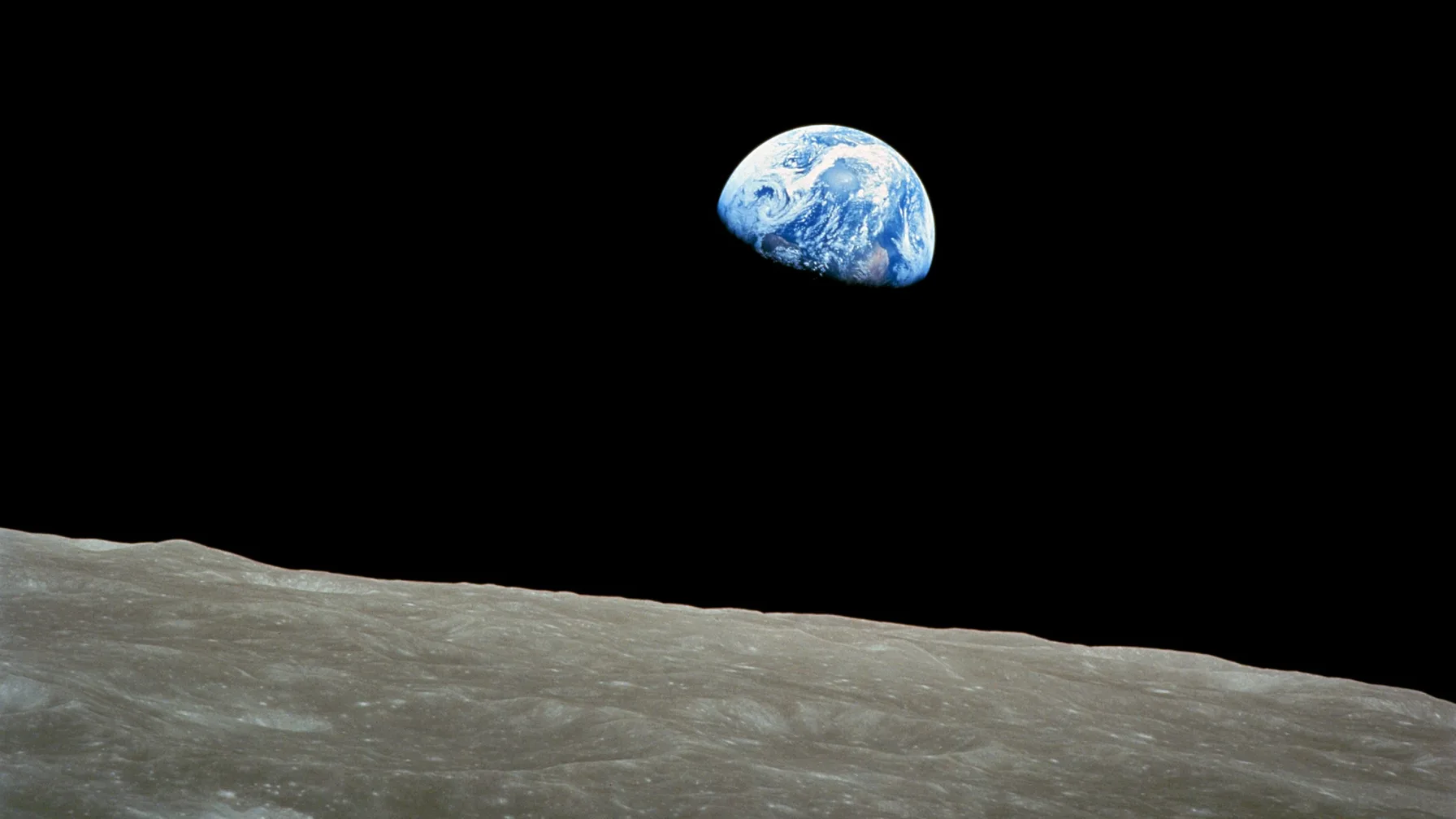
Sixty-seven years, one lane per programme
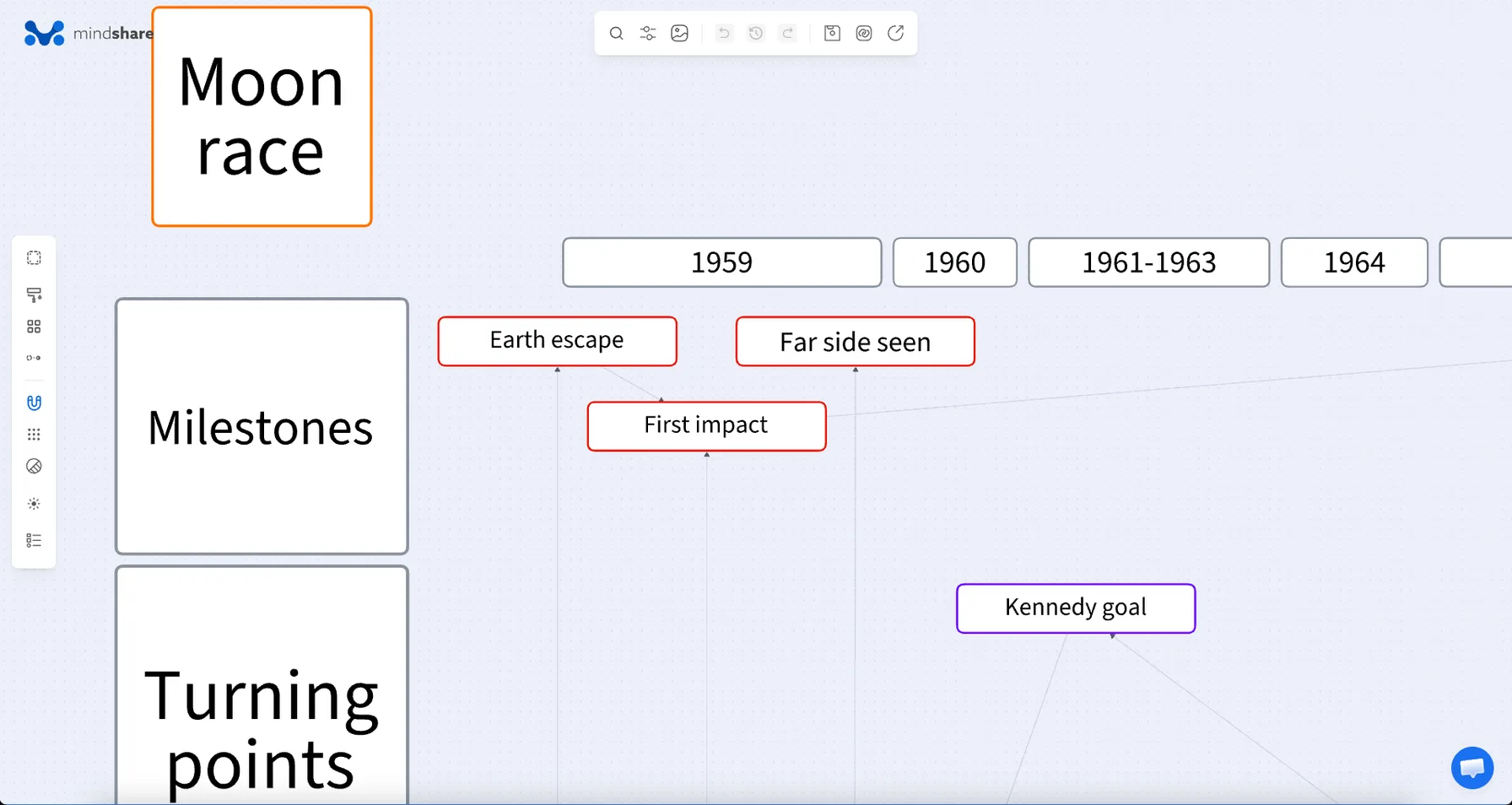
Time runs from left to right, with the empty years squeezed together. Each group of programmes has its own lane, from the Soviet Luna and Zond probes at the top, through NASA's robotic scouts, Apollo, Artemis and the commercial landers, to China and the other nations at the bottom. Every mission sits in its lane at its launch date, and the astronauts sit under their flights.
Two rows cut across the lanes: the milestones, the firsts that moved the whole effort forward, and the turning points, the decisions, accidents and discoveries that changed its course.
Four questions this knowledge graph answers
Who got there first?
Mostly the Soviet Union. Of the eleven firsts of the first race, up to 1976, the Soviet Union made eight: the first escape from Earth's gravity, the first impact on the Moon, the first photographs of its far side, the first soft landing, the first lunar satellite, the first round trip around it, the first robotic sample return and the first rover. The United States made three, and two of them are the ones people remember: the first crew in lunar orbit, Apollo 8 in December 1968, and the first crewed landing, Apollo 11 in July 1969.
The firsts of the new century belong to more countries: China landed on the far side and brought back its soil, India landed near the south pole, Japan made the first pinpoint landing and a US company the first commercial one.
What does every landing build on?
One Soviet probe. On 3 February 1966 Luna 9 made the first soft landing and sent back pictures showing that the surface could carry a spacecraft. Follow the arrows out of that milestone and eight later firsts extend it: the first lift-off from the Moon, the first crewed landing, the first robotic sample return and the first rover, then China's first landing, the south pole, the pinpoint landing and the first commercial landing, 58 years later.
The chains run on from there. The far-side samples that Chang'e 6 brought back in 2024 extend two firsts at once: China's far-side landing and the Soviet sample return of 1970.
What stopped the race?
Two turning points a year apart. In July 1969, days before Apollo 11, the failures of the Soviet N1 rocket made a Soviet crewed landing impossible: they closed the Zond programme, and the Soviet effort carried on with robotic Luna sample returns. In September 1970 budget cuts removed the last planned Apollo flights, and Apollo 17 became the last landing. Luna 24 brought back the last samples in August 1976, and then the timeline goes quiet: the next mission to the Moon is Japan's Hiten, in January 1990.
What brought the Moon back was water. The turning points from 1996 to 2009 are discoveries: Clementine's hint of polar ice, then Chandrayaan-1 and LCROSS finding water in 2009. That last one reshapes the commercial landers, which aim at the south pole to look for it.
What does an orbiter see from above?
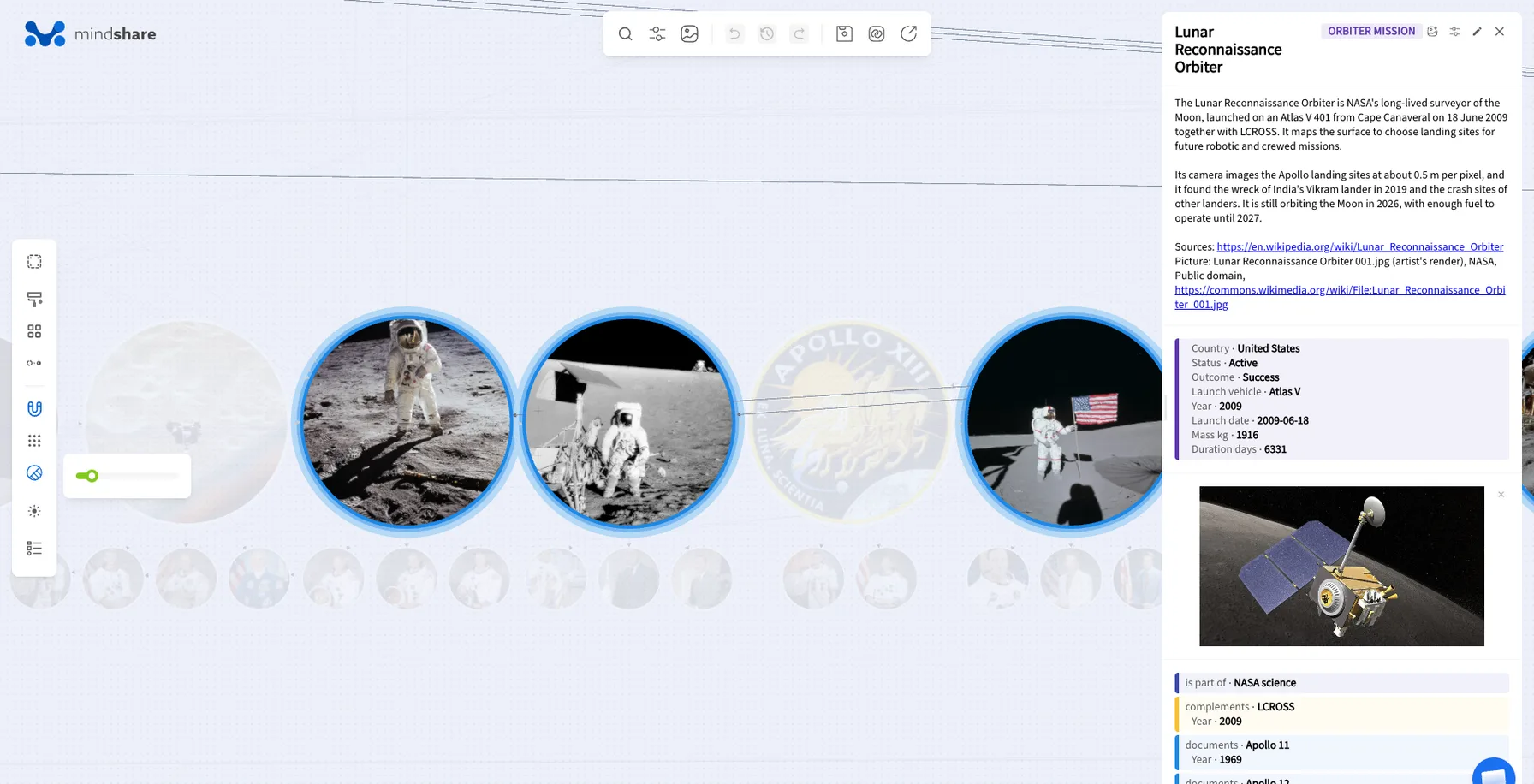
NASA's Lunar Reconnaissance Orbiter has circled the Moon since 2009. Click it and its connections reach back across the whole timeline: it documents 15 landing sites, the six Apollo landings, three Surveyors, five Soviet Luna landers and Intuitive Machines' IM-2 of 2025. It also identifies three crash sites: India's Vikram lander, Russia's Luna 25 and ispace's Hakuto-R.
How to read the knowledge graph
-
Start with the question
Click Moon race, top left. Its description tells the whole road in a few paragraphs: how did humanity get from Luna 2 to Artemis?
-
Follow a chain of firsts
Click Earth escape, Luna 1 in January 1959. It is extended by First impact, which is extended by Soft landing, and from there the arrows fan out to every landing first that followed.
-
Open a mission
Click Apollo 11. The detail panel gives its rocket, launch date, mass and crew. Its connections show the scouts that went before it (Lunar Orbiter 1 and 5, Ranger 8, Surveyor 5), its rehearsal Apollo 10, its crew, the Soviet Luna 15 flying at the same time, and the turning point it closed: Kennedy goal.
-
Follow a programme
Click Apollo at the start of its lane. It was started by Kennedy's goal of May 1961, delayed by the Apollo 1 fire and closed by the cancellation of 1970, and it includes the nine flights to the Moon, from Apollo 8 to Apollo 17.
-
Find a record that was broken
Click Artemis II, April 2026. Its crew became the farthest humans from Earth, a milestone that surpasses the record Apollo 13 set in 1970, when the crew looped around the Moon after an oxygen tank failed.
Map a race of your own
Any long effort with many players works the same way: a technology race, a medical field, a sport across decades. Give each group of players a lane, place every attempt at its date, and add the firsts and the turning points as their own rows, connected to what achieved them and what they changed. See how properties and types work, or ask us for help preparing the data.